
Catégories
Nouveau blog
Quelles sont les applications des ventilateurs sans cadre dans les appareils électroniques fins et compacts ?
December 29 , 2025Avec l'évolution constante des appareils électroniques vers des conceptions toujours plus fines et compactes, l'espace interne se réduit comme peau de chagrin. Des appareils électroniques grand public aux équipements de communication en passant par les objets connectés, on attend des performances accrues dans des boîtiers toujours plus petits. Cette tendance impose des exigences considérables aux solutions de gestion thermique, rendant les ventilateurs de refroidissement traditionnels à cadre moins adaptés à de nombreuses applications. Les ventilateurs sans cadre se sont imposés comme une alternative flexible, conçue spécifiquement pour les environnements à espace restreint.
Rather than simply removing the outer frame, frameless fan designs focus on structural optimization and system-level integration to maximize airflow efficiency within limited space.
New Cooling Requirements in Slim Electronic Devices
Compact electronic devices feature highly integrated components, resulting in concentrated heat generation and faster temperature rise. At the same time, limited internal volume restricts airflow paths, making conventional cooling solutions less effective.
In such conditions, a dc cooling fan must deliver stable thermal performance while offering flexibility in size, thickness, and installation. Frameless fans address these requirements by allowing closer integration with device structures and airflow channels.
Structural Characteristics and Advantages of Frameless Fan s
Frameless fans eliminate the traditional outer housing, enabling the impeller to work directly with the device enclosure or internal ducting. This approach reduces non-functional structural volume and allows more space for effective airflow.
In slim devices, frameless designs conform more closely to internal cavities, reducing air leakage and improving airflow utilization. This makes them particularly effective for targeted cooling of specific heat-generating components.
Compatibility With Different Fan Types
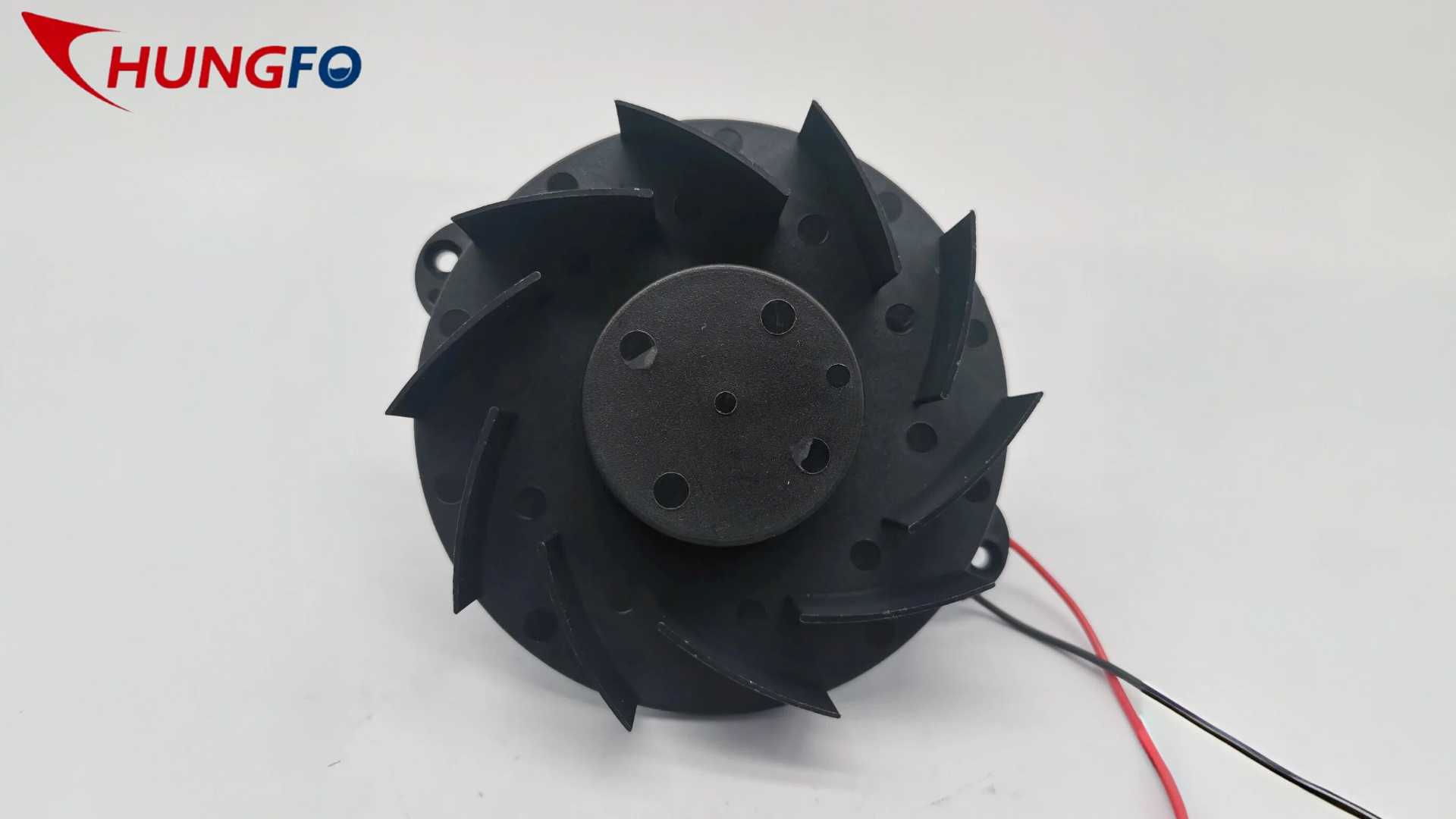
Frameless design concepts are not limited to a single fan structure. They can be applied to both axial and centrifugal configurations depending on application needs.
When combined with an axial fan dc structure, frameless designs help minimize overall thickness while maintaining consistent airflow. This combination is commonly found in laptops, tablets, and compact control modules.
For applications requiring higher pressure within confined spaces, frameless blower fans can work directly with internal airflow channels to deliver focused cooling without increasing device size.
Benefits for System Airflow Design
The true value of frameless fans becomes apparent at the system level. Their open structure allows designers greater freedom to optimize inlet and outlet placement, creating more efficient airflow paths.
This customization reduces airflow short-circuiting and minimizes wasted circulation, ensuring that limited airflow resources are used effectively. In compact electronics, such system-level optimization often delivers greater benefits than simply increasing fan performance.
Energy Efficiency and Noise Performance
Energy consumption and acoustic performance are critical considerations in slim devices. By reducing structural airflow resistance, frameless fans can achieve required cooling at lower rotational speeds.
Lower operating speeds reduce power consumption of the dc cooling fan and significantly improve noise characteristics, which is especially important for user-facing electronic products.
Reliability and Durability Considerations
Although frameless fans feature simplified structures, they are not inherently less reliable. When designed as part of an integrated cooling system, mounting stability and operating conditions can be carefully controlled.
By addressing vibration, fixation methods, and material compatibility during the design phase, frameless fans can achieve long-term reliability comparable to traditional framed designs.
The Importance of Manufacturing Expertise
Frameless fan applications demand a high level of design coordination between the fan and the device enclosure. Achieving optimal performance requires experience in airflow modeling, structural integration, and application-specific customization.
China Chungfo fan leverages extensive manufacturing and application expertise to deliver frameless fan and dc cooling fan solutions tailored for slim and compact electronic devices.
Conclusion
As electronic devices continue to shrink in size while increasing in performance, thermal management solutions must evolve accordingly. Frameless fans offer a flexible and efficient approach to cooling in space-constrained environments. Whether combined with axial fan dc designs for efficient airflow or with blower fans for targeted pressure delivery, frameless fans are becoming an increasingly important element in modern compact electronic device cooling systems.