Catégories
Nouveau blog
Pourquoi les ventilateurs de refroidissement des phares produisent-ils un bourdonnement ?
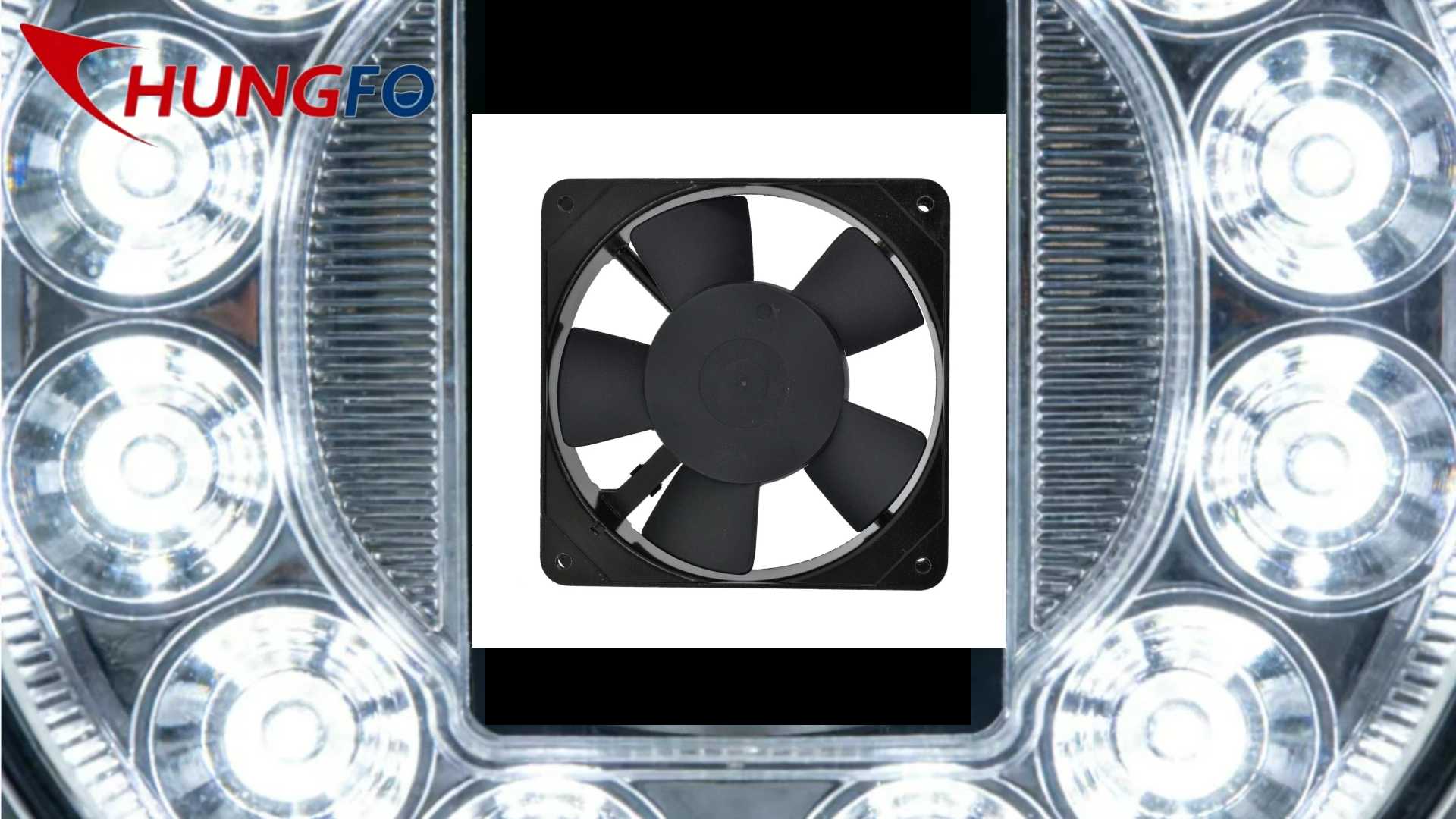
March 13 , 2026Avec l'augmentation constante de la luminosité et de la consommation énergétique des phares automobiles à LED, la gestion thermique est devenue un aspect crucial de leur conception. Le ventilateur de refroidissement est désormais largement utilisé pour garantir un fonctionnement stable et prévenir la surchauffe des systèmes LED haute puissance.
Cependant, les ingénieurs constatent souvent qu'un ventilateur de refroidissement à courant continu fonctionne silencieusement lors des tests individuels, mais devient sensiblement plus bruyant une fois installé dans le boîtier du phare. Ce phénomène est courant dans les systèmes d'éclairage automobile et résulte généralement de la combinaison de plusieurs facteurs plutôt que d'un problème unique.
Comprendre les sources de bruit d'un ventilateur de refroidissement peut aider les fabricants à améliorer la conception des produits et à réduire les problèmes acoustiques dans les applications automobiles.
Bruit aérodynamique des ventilateurs de refroidissement des phares
Le bruit aérodynamique est l'une des principales sources de bruit dans un ventilateur de refroidissement de phare. Lorsque le ventilateur tourne à grande vitesse, les pales interagissent avec l'air ambiant, créant des turbulences et des fluctuations de pression.
Lorsque les pales d'un ventilateur de refroidissement à courant continu fendent l'air, des tourbillons se forment derrière elles et génèrent des perturbations dans le flux d'air. Dans les petits ventilateurs à grande vitesse couramment utilisés dans les systèmes d'éclairage automobile, le bruit aérodynamique augmente rapidement avec la vitesse de rotation. Dans de nombreux cas, le niveau sonore croît de façon exponentielle avec la vitesse du ventilateur.
Un autre facteur important est la résonance de l'écoulement d'air à l'intérieur du bloc optique. Le bloc optique forme souvent une cavité semi-fermée. Lorsque la fréquence de fonctionnement du ventilateur de refroidissement se rapproche de la fréquence naturelle de cette cavité, une résonance acoustique se produit et amplifie le son.
Cela explique pourquoi un ventilateur mesurant environ 35 dB lors de tests en plein air peut atteindre plus de 45 dB après son installation dans la structure du phare.
Bruit mécanique et structure des paliers
Le bruit mécanique est un autre facteur important qui affecte les performances acoustiques d'un ventilateur de refroidissement à courant continu.
Le type de roulement utilisé dans un ventilateur de refroidissement de phare influe considérablement sur le bruit et la durée de vie. Les paliers lisses sont généralement silencieux au début, mais peuvent subir une dégradation de la lubrification à haute température. Les roulements à billes simples offrent une durabilité moyenne, tandis que les roulements à billes doubles offrent une durée de vie plus longue et une meilleure résistance à la température, ce qui les rend adaptés aux environnements automobiles.
Toutefois, si la précision des roulements ou la qualité de la lubrification sont insuffisantes, un bruit de frottement à haute fréquence peut se produire.
De plus, le bruit électromagnétique généré par le ventilateur sans balais Le moteur peut contribuer au niveau sonore global. La commutation magnétique et les vibrations du stator pendant le fonctionnement du moteur peuvent générer un léger bruit de haute fréquence, surtout lorsqu'elles sont combinées à une résonance structurelle.
Commande PWM et sources de bruit cachées
De nombreux systèmes d'éclairage automobile contrôlent la vitesse du ventilateur à l'aide de signaux PWM. Bien que la commande PWM soit efficace, des réglages incorrects peuvent engendrer des problèmes acoustiques inattendus.
Si la fréquence PWM est trop basse, le moteur du ventilateur de refroidissement à courant continu peut subir des pulsations de couple périodiques, générant un bourdonnement basse fréquence. Pour éviter ce problème, il est généralement recommandé d'utiliser des fréquences PWM supérieures à 20 kHz, car elles dépassent la plage audible par l'oreille humaine.
La régulation de vitesse par modulation de largeur d'impulsion (PWM) à haute fréquence ou par tension peut améliorer considérablement les performances acoustiques d'un ventilateur de refroidissement dans les applications de phares.
Réduction du bruit dans les systèmes de refroidissement des phares
Réduire le bruit d'un ventilateur de refroidissement de phare nécessite une approche systémique plutôt que de se concentrer sur un seul composant.
Les ingénieurs peuvent améliorer les performances acoustiques en optimisant la conception des pales, en réduisant la vitesse du ventilateur grâce à des pales de plus grande taille et en améliorant les flux d'air à l'intérieur du boîtier du phare. Des matériaux d'isolation des vibrations, tels que des coussinets en silicone, peuvent également contribuer à prévenir la résonance structurelle.
De plus, des tests complets du système sont essentiels. Évaluer un ventilateur de refroidissement CC Le fonctionnement en conditions extérieures uniquement peut ne pas refléter fidèlement le bruit réel à l'intérieur du bloc optique.
En combinant l'optimisation aérodynamique, les améliorations de la conception mécanique et des stratégies de contrôle de vitesse appropriées, les fabricants peuvent réduire considérablement le bruit des systèmes de refroidissement des phares automobiles.