Catégories
Nouveau blog
Comment améliorer l'efficacité du refroidissement sans augmenter le bruit
January 14 , 2026Dans les appareils électroniques, les systèmes de contrôle industriels et les appareils électroménagers, l'efficacité du refroidissement et le niveau sonore sont souvent perçus comme des exigences contradictoires. L'augmentation du débit d'air est généralement associée à une vitesse de ventilation plus élevée et à un niveau sonore accru. Cependant, grâce à une conception et une sélection appropriées, les performances de refroidissement peuvent être améliorées sans augmenter significativement le niveau sonore.
L'efficacité du refroidissement ne dépend pas uniquement de la vitesse du ventilateur. La fonction principale d'un ventilateur de refroidissement CC L'objectif est de créer un flux d'air stable et efficace. Si le flux d'air est obstrué, recirculé ou présente des fuites à l'intérieur du boîtier, une vitesse de ventilation plus élevée risque de n'apporter qu'une amélioration thermique limitée. Optimiser les flux d'air en améliorant l'emplacement des entrées et sorties d'air et en réduisant les virages serrés et les zones mortes permet d'améliorer considérablement l'efficacité du refroidissement sans augmenter le bruit.
Le choix du type de ventilateur joue un rôle important dans l'équilibre entre le flux d'air et l'acoustique. Dans les systèmes à faible résistance à l'écoulement d'air et aux structures relativement ouvertes, un ventilateur axial peut fournir un débit d'air suffisant à des vitesses plus faibles, ce qui permet un fonctionnement plus silencieux. En revanche, les systèmes présentant des circuits d'air complexes ou une résistance plus élevée peuvent nécessiter une vitesse excessive de la part d'un ventilateur axial, entraînant une augmentation du bruit. Dans de tels cas, un ventilateur peut être plus efficace, en fournissant une pression statique plus élevée à des vitesses de rotation plus faibles et en assurant un meilleur refroidissement avec des niveaux de bruit contrôlés.
La taille et l'épaisseur du ventilateur influent également sur le rapport entre efficacité et bruit. Dans les limites de l'espace disponible, le choix d'un ventilateur de refroidissement CC légèrement plus grand permet souvent d'atteindre le débit d'air requis à des vitesses inférieures, réduisant ainsi le niveau sonore. Les ventilateurs plus petits nécessitent généralement des vitesses plus élevées pour répondre aux besoins de refroidissement, ce qui augmente le bruit haute fréquence. Prendre en compte l'espace disponible dès la phase de conception contribue à un meilleur équilibre à long terme.
Les méthodes de contrôle du ventilateur influent également sur les performances acoustiques. Faire fonctionner un ventilateur en continu à vitesse maximale est rarement la solution la plus efficace. L'utilisation d'une régulation de vitesse basée sur la température ou d'une régulation intelligente permet à un ventilateur de refroidissement CC d'adapter sa vitesse à la charge thermique réelle. Cela réduit le bruit en cas de faible ou moyenne charge, tout en assurant un refroidissement suffisant en fonctionnement maximal.
La stabilité mécanique est un autre facteur clé. Les vibrations sont une source fréquente de bruit, même lorsque le ventilateur est conçu pour un faible niveau sonore. Un montage correct des ventilateurs axiaux ou des souffleurs, l'évitement de la résonance et l'utilisation de solutions d'amortissement appropriées permettent de réduire considérablement le bruit perçu sans compromettre le débit d'air.
L'entretien joue également un rôle dans les performances à long terme. L'accumulation de poussière et de débris peut restreindre le flux d'air et perturber l'équilibre des pales, augmentant progressivement le bruit et réduisant l'efficacité du refroidissement. Un nettoyage régulier des ventilateurs de refroidissement CC et des conduits d'air contribue à maintenir des performances constantes et un fonctionnement silencieux.
Dans la pratique, collaborer avec des fournisseurs de ventilateurs expérimentés simplifie l'optimisation du rapport efficacité/bruit. Les fabricants maîtrisant les applications peuvent formuler des recommandations basées sur des données de performance éprouvées. China Chungfo Fan accompagne ses clients en optimisant en permanence la structure, les matériaux et les performances de ses ventilateurs afin d'améliorer l'efficacité du refroidissement tout en maîtrisant le bruit.
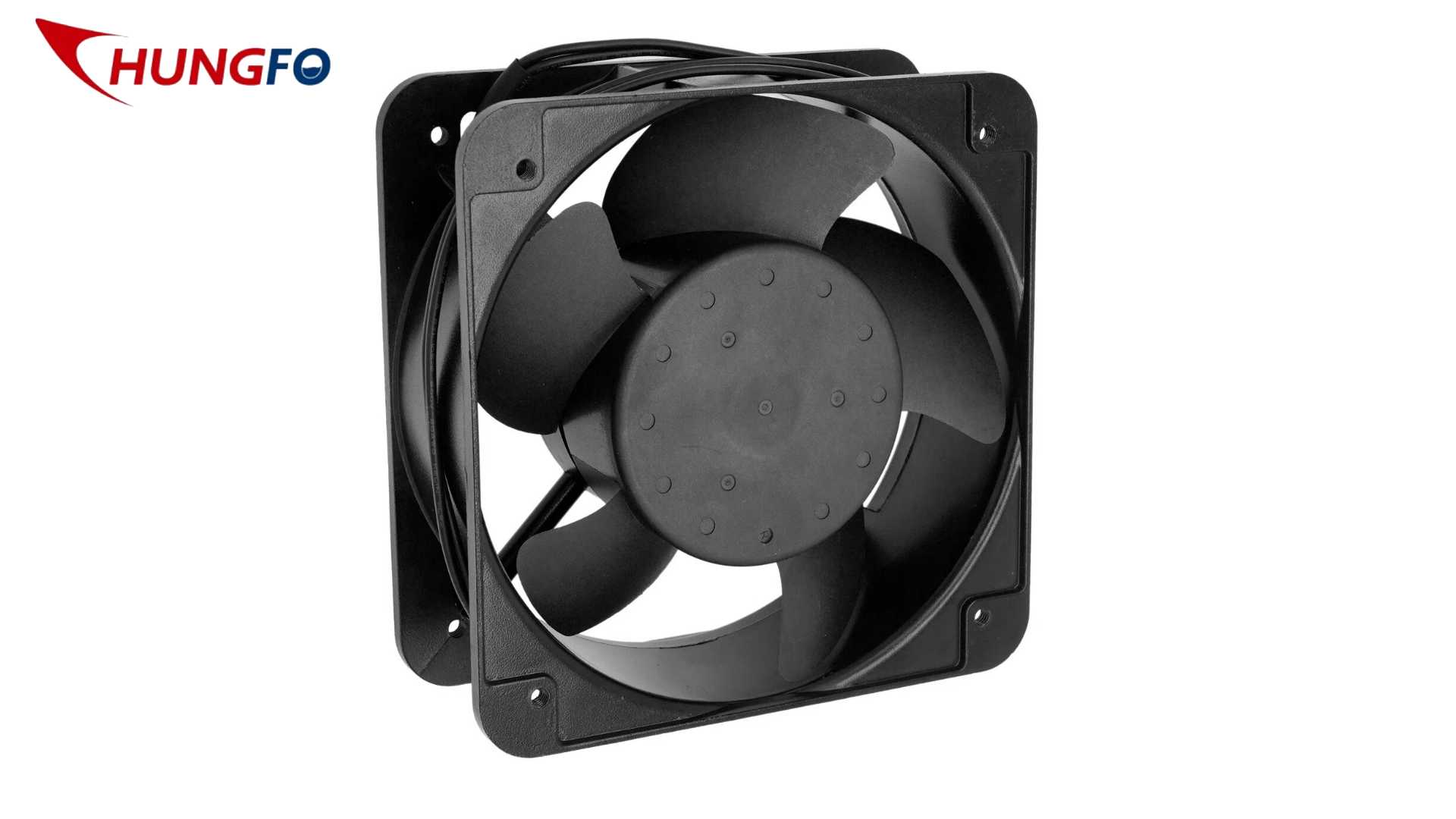
En conclusion, améliorer l'efficacité du refroidissement n'implique pas nécessairement une augmentation du niveau sonore. En optimisant la conception du flux d'air, en choisissant le ventilateur axial ou le ventilateur soufflant approprié, en sélectionnant des ventilateurs de refroidissement CC de taille adéquate et en appliquant une commande intelligente et une installation correcte, il est possible d'obtenir simultanément des solutions de refroidissement efficaces et silencieuses.